In online financial markets, practical proficiency cannot be achieved through theory alone. The demo account offered by Olymp Trade provides a controlled environment where traders can acquire hands-on experience without risking real funds.
Concept and Purpose
The demo account is a simulation of live trading with virtual capital, typically set at $10,000. Its main objectives include:
- Allowing methodical testing of strategies across various asset classes such as Forex, indices, commodities, and digital options.
- Enabling users to monitor market dynamics in real time under realistic conditions.
- Familiarizing traders with platform operations, including order execution, leverage application, and trade management.
By creating a risk-free space, the demo account emphasizes skill acquisition and analytical rigor.
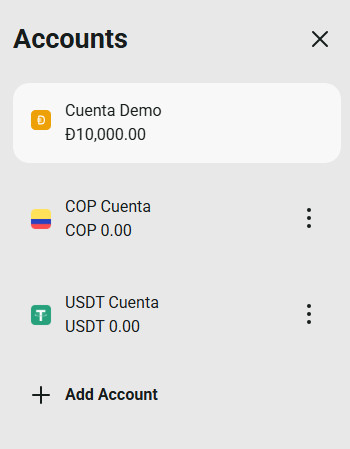
Features of the Demo Environment
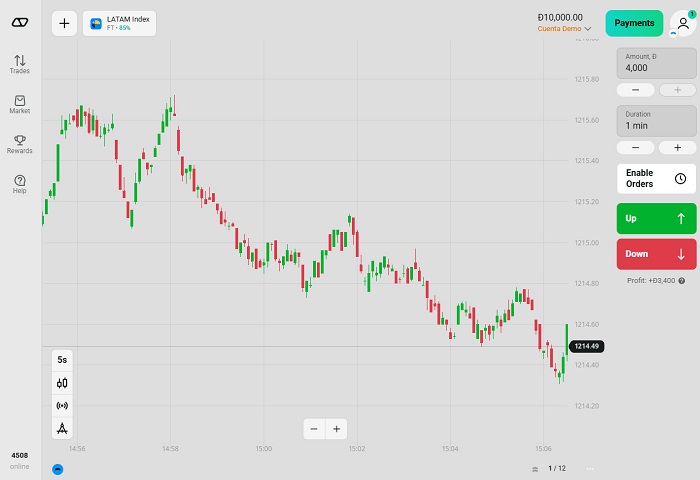
The platform’s demo environment replicates live market conditions precisely:
- Real-time charts with continuously updating price movements.
- Technical analysis tools such as moving averages, Bollinger Bands, and Relative Strength Index (RSI).
- Market execution speeds and trade settlement identical to the live account.
This fidelity ensures that strategies developed in the demo account maintain effectiveness when applied in real trading scenarios.
Risk-Free Strategy Testing
A critical advantage of the demo account is the ability to practice disciplined risk management:
- Traders can experiment with different trade sizes and leverage to assess risk tolerance.
- Potential psychological reactions to gains and losses can be observed in a controlled setting.
- Decision-making processes can be refined based on repeated simulated trading outcomes.
Through such structured experimentation, traders cultivate precision and avoid impulsive errors in real trading.
Operational Guidance
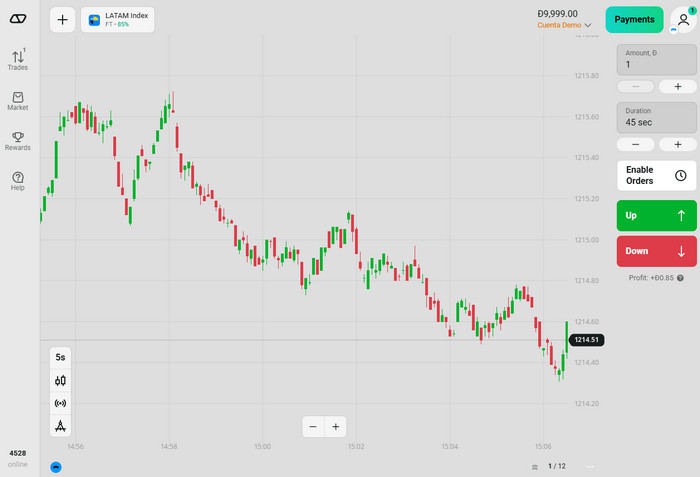
Effective use of the demo account follows a systematic approach:
- Register on Olymp Trade and activate the demo mode.
- Allocate virtual funds to multiple assets for analytical testing.
- Document results to identify strategies that optimize risk-reward balance.
- Gradually translate proven strategies into live trading operations.
This approach ensures a disciplined, data-driven transition from simulation to actual trading.